
Top Countries Importing Desiccated Coconut from India in 2026: Trends, Stats, and Growth Drivers
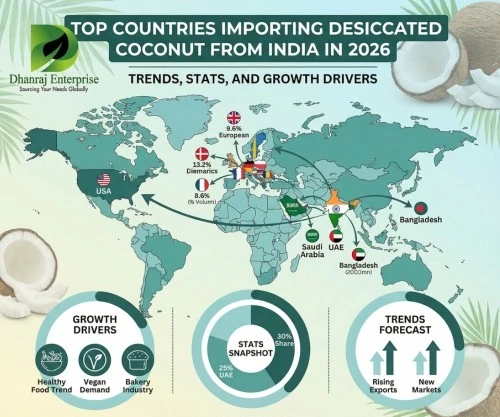
Top Countries Importing Desiccated Coconut from India in 2026: Trends, Stats, and Growth Drivers
India continues to grow as an exporter of desiccated coconut on a global scale. In 2026, India exported desiccated coconut to over 65 countries looking for healthy Tropical Crunch, an ingredient used in baked goods, confectionery, and health foods, setting export records based on the growth of demand for health-conscious markets combined with holiday baking season-driven sales from around the world.
In Kerala and Tamil Nadu, Coconut Farmers grate coconuts into fine, dry flakes and package these, shipping them to excited importers around the world. In addition, around USD 100 million worth of desiccated coconut annually flows from the palms of coconut farmers.
The worldwide Urban Consumer markets have a strong focus on clean-label products. India’s hygiene, which can be validated through FSSAI and HACCP certifications, is a huge factor in promoting exports. Between the first half of FY25 and now, exports increased 300% to USD 9.6 million from the previous period, which suggests that the total amount exported will be approximately 80,000 Metric Tons in 2026. The top importing countries include the USA, the Middle East, and Europe—are you ready to take a look?
America: The Leading Resource
39% of India’s shipments of desiccated coconut go to America’s bakery and snack companies. By the middle of 2025, American companies will have received 606 shipments of desiccated coconut from India. Walmart and Costco’s shelves will be filled with Indian flaked desiccated coconut being used to make cookies, trail mix, or vegan snacks. This demand has also increased due in part to health crazes such as “keto” and “gluten-free”, which have increased the amount imported each year by 15%.
When importing desiccated coconut, American importers prefer to purchase the Medium Fine grade, which is priced at $2.50 to $3.00 per kg. The ports of New York and Los Angeles are extremely busy because of this. By 2026, imports of desiccated coconut into the US are expected to exceed 25,000 tons and have a total value of $70 million, not only because of the Christmas and Thanksgiving holidays but also because of the increased demand. What is the secret to keeping this giant of an industry happy and loyal to the products that Sri Lanka produces? A reliable source of supply for desiccated coconut.
The UAE is the second largest exporter of desiccated coconut, accounting for 273 shipments, which makes up 11% of all exports. The coconut is processed through Dubai’s Free Zones, where it is exported to neighbouring countries, where it is used to make both sweet and savoury dishes. One shipment of desiccated coconut in April 2025 weighed 13400 kg and was valued at USD 43000.
The expatriate community of Indians living in the UAE and the growing number of high-end hotels and resorts account for the big demand for desiccated coconut powder because they prefer using fine powder when making very smooth and creamy ice cream. The projections for 2026 have desiccated coconut exports reaching 12000 tons and the growth rate increasing to 12% due to the expected reduction in tariffs through the UAE-India CEPA. How can such a small country handle such a large volume of exports? The answer is that the UAE acts as a local transhipment hub and therefore creates an ideal gateway for exports from India into other Middle Eastern countries.
The Rising Star of Turkey in European Snacks
Chocolatiers and Biscuit Manufacturers In Turkey Have Secured 278 Shipments, Just Ahead of the UAE for 3rd Place. Turkish Delight and Pastry Factories in Istanbul Are Creating Unique Products Using Indian Flakes and Finding Workarounds to Avoid Tariffs Imposed By The European Union. While The Costs Of These Products Are around USD 2.20/Kilogram For The High Oil Content Varieties.
The Rate Of Growth For Turkey’s Snack Exports Will Continue At 18%/Year Until 2026. India Provides The Low Moisture Flakes, Less Than 3%, that Turkey Uses In Their Products, And They Have Loyalty from their Users. The Currency Market’s Fluctuations Are A Challenge For Exporters, But Free Trade Agreements Are Helping To Keep A Consistent Supply Going To The Global Market. If You Have Ever Wondered Why Turkey Is So Successful As An Exporter Of Snacks, You Can Find The Answers In Its Geographical Location And Its Love Of Confectionery Products.
Germany and Iraq are both growing markets in the same way. Both countries export all of the same products (coconut cream, etc.) to the rest of Europe and the Middle East, as well as to other areas of the world.
As countries rebuild after long periods of destruction, these two countries are both experiencing major economic growth due in part to the amount of imports they will receive from other areas of the world.
If you have an interest in coconut water, syrups, or any coconut products, then watch for Germany and Iraq to become two of the leading providers of those products. You may soon see them as THE leaders.
Brazil is the largest importer; they bring in 182 shipments for Carnival confections. Australia was next with 138 shipments; their lamingtons and Muesli bars are very popular.
Next in line are Nepal, Canada, Kuwait, Qatar, the UK and Saudi Arabia all altogether, they account for about 30% of the imports.
Saudi Arabia’s demand has risen due to its annual Pilgrimage (Hajj) season, and the UK has seen an increase in the demand for bakery items from its bakery chains.
In Australia, the increasing popularity of health and fitness (Wellness) trends means that there will be an increase in imports to Australia.
In addition to this, the growth in e-commerce and the speed with which Amazon can deliver food products to US home bakers will lead to continued growth in the market.
So, who will be the next hidden gem? Stay tuned!
Production Hubs Boost Export Growth
Most of India’s sixty thousand metric tons comes from Kerala, ahead of Tamil Nadu’s Pollachi area. Uniform flakes come out steady thanks to machine drying, hitting ISO marks foreigners rely on. These shipments carry HS number 08011100, offering fine, middle-sized, or rough versions shaped by customer preference.
Picture this: sun-dried crops cut power needs by two-fifths, pulling in green-minded shoppers across Europe. Year after year, mixed-breed coconut trees deliver more fruit – about eight per cent better harvests. Look ahead, innovations shift toward using every drop of coconut liquid, aiming to leave nothing behind. The glow of sustainability keeps growing.
Challenges and Trade Barriers
A jump in shipping fees during 2025 sliced into profits; meanwhile, crop damage from tiny pests wiped out a tenth of harvests. Stiff inspections by American regulators mixed with strict European chemical limits keep growers on edge. Despite supplying more than one-third of the world’s supply, the Philippines faces downward pressure on pricing.
With damp loads often rejected, sellers respond using tight vacuum wraps. Financial hedges plus coverage ease transaction dangers. Will India hold its ground? Without doubt, superior standards and sharper paths make it possible.
Government Support and Policy Successes
Shipment wait times are now half what they used to be – APEDA went digital with paperwork. By 2026, expect 100 fresh coconut farms sprouting up, backed by government funding. Trade routes opened free of tariffs after deals with the UAE and Australia. Exports? Likely to rise about one-fifth from where they stand
Freshness holds firm in high-fat flakes thanks to cold chain support. By 2030, a target of two hundred million dollars each year comes into view. The path forward grows from research that brings forth palms resistant to pests – changing what’s possible.
Future Opportunities and Strategic Tips
Folks selling abroad grab higher prices in America for organic goods, yet demand surges across Europe for meat-free options. Breakfast cereal with a touch of cocoa taps into modest but growing markets. Because digital records reveal each stage, younger buyers lean toward transparent brands.
By 2030, India could move ahead of the Philippines – that is what some trading centres suggest. Access to platforms like Volza may create chances beyond borders. If aiming at Europe, earning BRC approval tends to draw attention. Acting fast gives an edge when warm climates offer openings.
Market Outlook 2027
India targets $150 million in dried coconut exports by 2026 – a steep climb from the prior year’s $120 million. Top importers dominate the flow, with the U.S. claiming four-tenths of all revenue. Close after comes the United Arab Emirates, holding close to one-twelfth. Turkey trails slightly. Iraq takes a minor portion. Smaller still is Germany’s piece. Growth surges ahead, pushed by consistent global demand. Each year brings another rise, anywhere from fifteen to twenty points. That speed should stay steady beyond halfway through the decade.